
Quick Answer
What does the prostate do?
The prostate is a walnut-sized gland in men that produces seminal fluid, which nourishes and transports sperm. It sits below the bladder and surrounds the urethra, playing key roles in both reproductive and urinary function. As men age, the prostate often enlarges, which can affect urination.
Most men don't think about their prostate — until something goes wrong. Yet this small gland plays a surprisingly important role in male health, affecting everything from fertility to bathroom habits.

In this guide, we'll explain what the prostate does, where it's located, and why it matters for your long-term health.
What Is the Prostate?
The prostate is a small gland found only in men. It's part of the male reproductive system and sits just below the bladder, in front of the rectum.
Key facts about the prostate:
- Size: About the size of a walnut in young men (roughly 3-4 cm)
- Weight: Approximately 20-30 grams in healthy adults
- Location: Surrounds the urethra (the tube that carries urine and semen)
- Composition: Made of glandular tissue, muscle fibers, and fibrous tissue
The prostate is unique because it continues to grow throughout a man's life. While this growth is normal, it can eventually cause problems — which is why understanding prostate health becomes more important with age.
Where Is the Prostate Located?
The prostate's location is key to understanding both its function and the symptoms that occur when it enlarges.
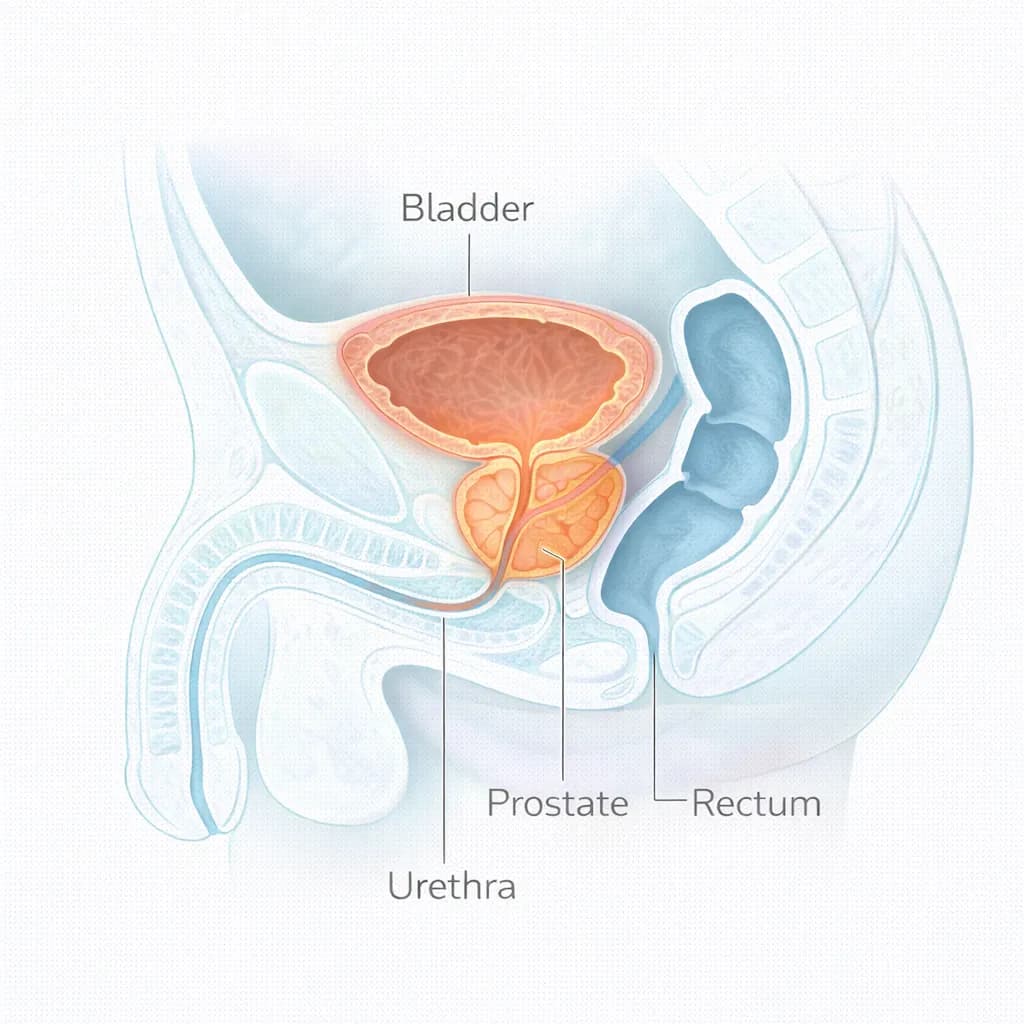
Anatomical position:
- Directly below the bladder
- In front of the rectum (which is why doctors can examine it with a digital rectal exam)
- Surrounds the upper portion of the urethra
- Behind the pubic bone
- Near the pelvic floor muscles
Because the prostate wraps around the urethra, any changes in prostate size directly affect urinary flow. This explains why prostate problems often show up as urinary symptoms first.
The Main Functions of the Prostate
The prostate has several important jobs in the male body:
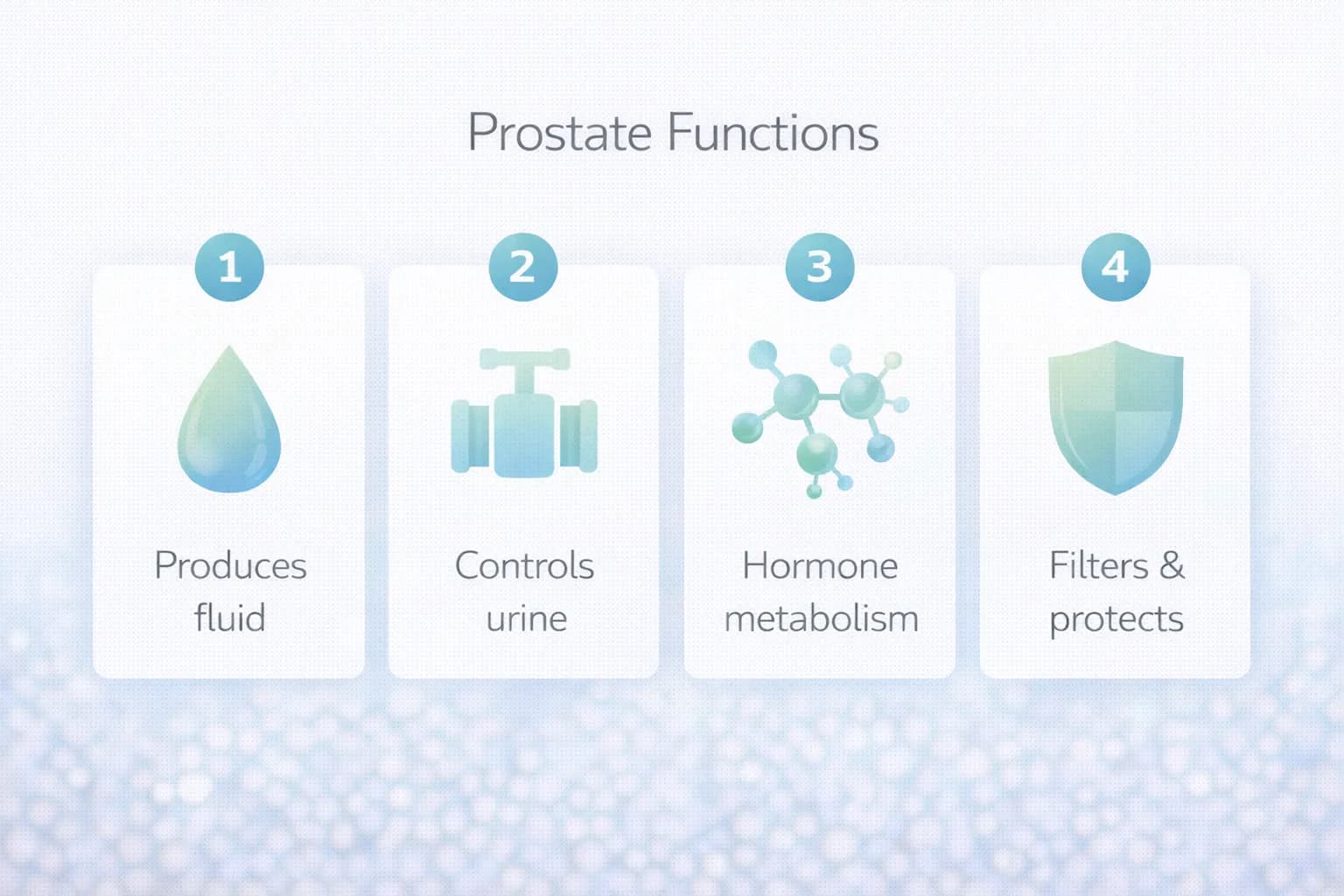
1. Producing Prostatic Fluid
The prostate's primary function is producing prostatic fluid, which makes up about 25-30% of semen volume. This fluid is crucial for reproduction because it:
- Nourishes sperm: Contains enzymes, zinc, and citric acid that keep sperm healthy
- Protects sperm: Creates an alkaline environment that helps sperm survive the acidic vaginal canal
- Liquefies semen: Contains PSA (prostate-specific antigen), an enzyme that thins semen after ejaculation so sperm can swim freely
Without healthy prostatic fluid, sperm would have a much harder time reaching and fertilizing an egg.
2. Acting as a Valve
The prostate contains smooth muscle fibers that help control urine flow. During urination, these muscles relax to allow urine to pass. During ejaculation, they contract to:
- Prevent urine from mixing with semen
- Help propel semen through the urethra
- Close off the bladder during sexual activity
This valve function is why prostate problems often cause both urinary and sexual symptoms.
3. Hormone Metabolism
The prostate converts testosterone into its more potent form, dihydrotestosterone (DHT). DHT is essential for:
- Prostate development during puberty
- Maintaining prostate tissue
- Male sexual characteristics
However, DHT also drives prostate growth, which is why it's involved in benign prostatic hyperplasia (BPH) as men age.
4. Filtering and Protecting
The prostate acts as a filter for sperm, removing defective cells and debris before ejaculation. It also produces proteins that have antimicrobial properties, helping protect the reproductive tract from infection.
How the Prostate Changes with Age
One of the most important things to understand about the prostate is that it changes significantly as men age.
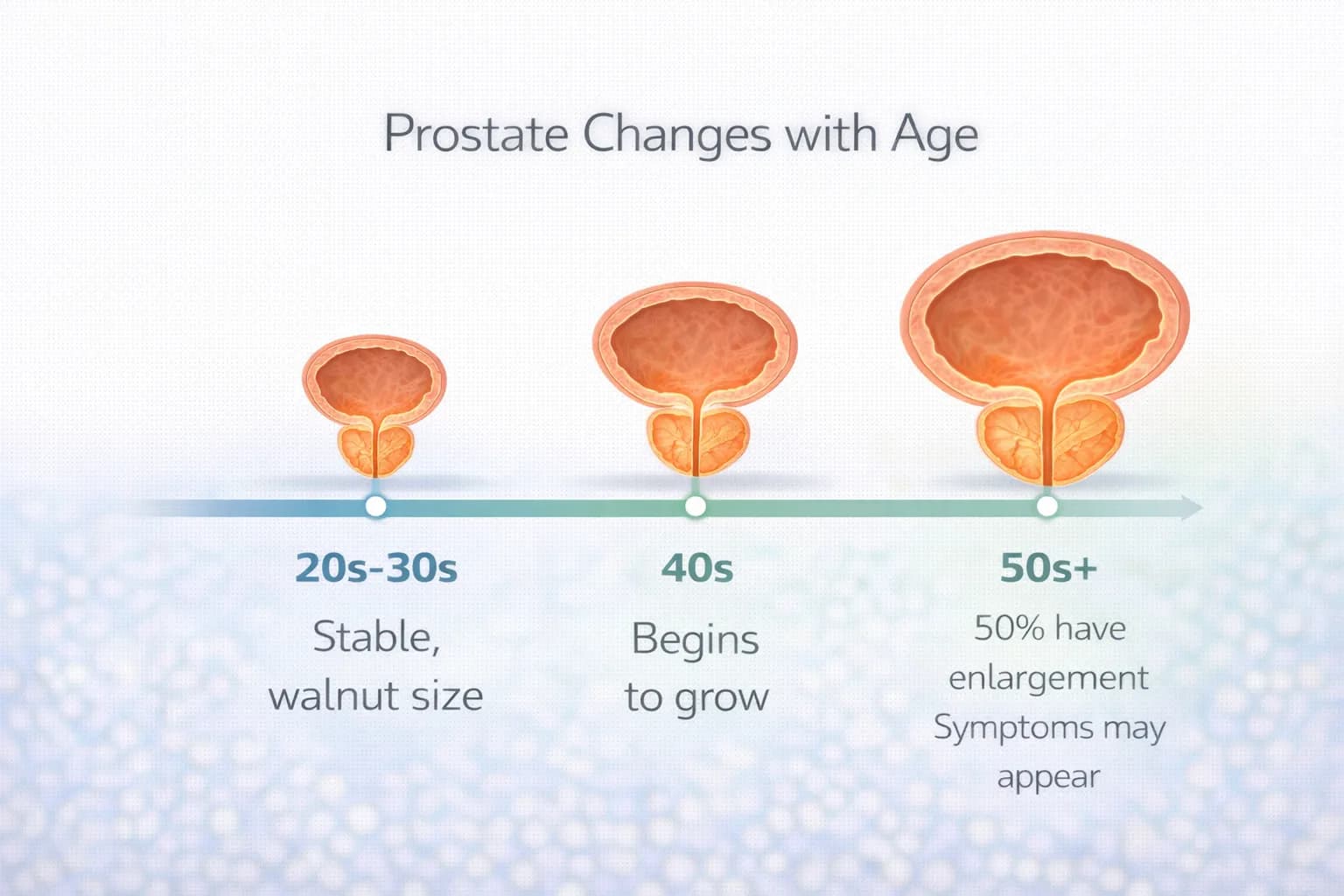
In Your 20s-30s
The prostate is typically stable at about walnut size. Most men have no prostate-related symptoms during these decades.
In Your 40s
The prostate often begins to grow again in a process called benign prostatic hyperplasia (BPH). This is a normal part of aging, not cancer.
In Your 50s and Beyond
By age 50, about 50% of men have some degree of prostate enlargement. By age 80, this increases to about 90%. As the prostate grows, it can squeeze the urethra and cause symptoms like:
- Frequent urination, especially at night
- Weak urine stream
- Difficulty starting urination
- Feeling of incomplete bladder emptying
- Urgency to urinate
These symptoms don't necessarily indicate serious disease, but they can significantly affect quality of life.
Common Prostate Conditions
Understanding common prostate issues helps you recognize when to seek medical attention:
Benign Prostatic Hyperplasia (BPH)
Non-cancerous prostate enlargement that's extremely common in older men. Symptoms are primarily urinary and can usually be managed with lifestyle changes, medications, or procedures if needed.
Prostatitis
Inflammation of the prostate, which can be caused by bacterial infection or other factors. Symptoms may include pain, urinary difficulties, and flu-like symptoms. Treatment depends on the cause.
Prostate Cancer
The most common cancer in men after skin cancer. Often grows slowly and may not cause symptoms in early stages. Regular screening (PSA test and/or digital rectal exam) is recommended for men over 50, or earlier for those with risk factors.
Supporting Prostate Health
While some prostate changes are inevitable with age, lifestyle factors can support overall prostate health:
Dietary factors:
- Tomatoes (lycopene)
- Cruciferous vegetables (broccoli, cauliflower)
- Green tea
- Fatty fish (omega-3s)
- Limiting red meat and dairy
Lifestyle factors:
- Regular exercise
- Maintaining healthy weight
- Staying hydrated
- Limiting alcohol and caffeine
- Regular ejaculation (some studies suggest benefits)
When to see a doctor:
- Changes in urination patterns
- Blood in urine or semen
- Pain in the pelvic area
- Erectile dysfunction
- Any concerning symptoms
For men already experiencing prostate-related symptoms, understanding which nutrients and supplements may support prostate health can be helpful. Learn more in our guide on prostate health supplements and what the research shows.
The Prostate and Sexual Health
The prostate's role in sexual function is often underappreciated. It contributes to:
Orgasm intensity: The prostate contains many nerve endings and contracts rhythmically during orgasm, contributing to pleasurable sensations.
Ejaculation: Prostatic contractions help propel semen during ejaculation.
Erectile function: While the prostate doesn't directly cause erections, prostate problems and their treatments can sometimes affect erectile function.
This connection between prostate and sexual health is why maintaining prostate wellness is important for overall male vitality.
Key Takeaways
- The prostate is a walnut-sized gland that produces fluid essential for sperm health and fertility
- It surrounds the urethra, so prostate changes directly affect urination
- The prostate naturally grows with age, which can cause urinary symptoms
- Common conditions include BPH (enlargement), prostatitis (inflammation), and prostate cancer
- Diet, exercise, and lifestyle factors can support prostate health
- Regular checkups become important after age 50
Medical Disclaimer
This article is for informational purposes only and does not constitute medical advice. The content is not intended to diagnose, treat, cure, or prevent any disease. Always consult with a qualified healthcare provider before starting any supplement regimen, especially if you have existing health conditions or take medications.